Wednesday, December 1st 2010
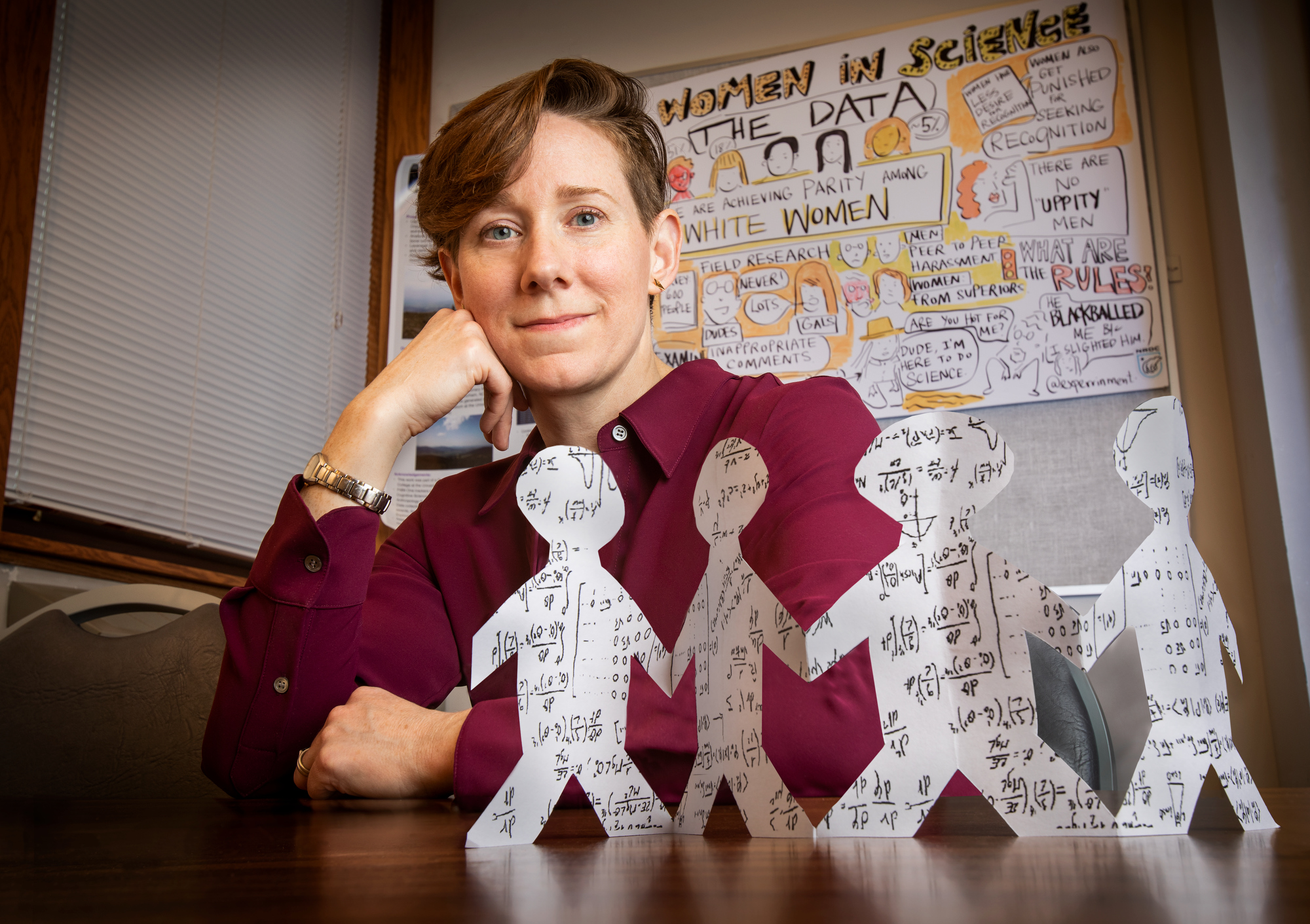
Like many science-oriented anthropologists, I was surprised, dismayed, even a little hurt by the news yesterday that the Executive Board of the American Anthropological Association has struck the word “science” fully from its mission statement. Many people have already commented on the implications of this change, positively and negatively (links below). The negative comments relate to the perceived erasure of science and science-oriented anthropologists, the emphasis on public understanding and activism over scholarship, and criticism of becoming a field so interpretative as to no longer produce its own knowledge. Positive comments include promoting indigenous knowledge and keeping Western ways of thinking from having the most prized position in our theoretical toolbox. The comment threads at some sites have been volatile, with charges lobbed from both sides of the debate.
Criticisms of the mission statement changes
On my end, I do agree with the two largest criticisms of the mission statement change: a scholarly professional association’s mission should be scholarly, and completely deleting the word science is not the right way to acknowledge the importance of respecting multiple ways of knowing. For the first, a scholarly professional association’s mission should be to advance knowledge and research, because that is the first step to advancing understanding among scholars, practicing anthropologists, and layfolk. It should be clear that I take outreach very seriously, given this blog and my Twitter account: I reach a minimum of five hundred people a day on Twitter (not counting retweets, which lead to hundreds more), and usually around sixty or so with the blog, with plans to increase my bloggy presence in the near future. Yet this aspect of my identity as an anthropologist is not possible without the research that I do: in fact, most of the outreach I do is directly informed by my research because one of my missions is to advance a more anthropological understanding of female reproductive physiology, particularly to young women.
For the second issue, I don’t think privileging other ways of knowing above science, by deleting it, is the way to go. I am a scientist, and yet my work is informed by feminist theory, and by an acknowledgement of the ways in which sexism has biased medical research on the female body. So I am often very critical of the performance and process of science. But I am not critical of the scientific method, and in fact believe that a thorough education in it, and truly internalizing its principles, lead to better scholarly research across all disciplines. At the same time, there are many instances where other ways of knowing are equally, or more important. Understanding the cultural and historical context of a population, analyzing literature and works of art, these are just a few of the ways in which science is potentially less useful, or at least only one of many frameworks through which one can test questions.
A completely relativistic perspective, that acknowledges and accepts all ways of knowing as equally valid, is dangerous, and yet this is what blogger Dooglas Carl appears to like about the mission statement change. I appreciate that the idea behind this is to be culturally sensitive, to acknowledge colonial influences and, frankly, cultural and physical genocide of many human populations.
When should we privilege science over other ways of knowing?
However, we need to be mindful of the times that science is, in fact, the most relevant way of knowing for a particular problem. There is a strong anti-science movement in the US that has taken two forms (with some interesting overlap, which for brevity’s sake I’ll ignore for now): the first is a rejection of science on religious grounds (creationism being the most notable example), the second is a rejection of science out of suspicion of science’s bias and priorities (most of the anti-vaccination movement, and alternative medicine, fall under this category). When we say science is just one way of knowing, equal among others, that makes it possible to privilege religion as a way of knowing about the origin of life, and to make the incorrect claim that creationism should be taught alongside evolution in our already diluted K-12 science curriculum, even though the scientific method pretty rigorously rejects creationism and supports evolution.
The second form of the anti-science movement comes from a good place — an interest in being critical, of acknowledging bias, of trying not to dominate over multiple ways of knowing, and an interest in not allowing for hasty treatment of symptoms without a greater understanding of long-term implications. But this view is ultimately flawed. When anti-vaxxers or proponents of alternative medicine want to replace evidence-based medicine with non-evidence based, non-empirically tested therapies (or worse, therapies that have been soundly rejected by the scientific method), it is replacing critical thinking with woo. This is where Orac has noted some interesting parallels between the anthropology/ science debate and the evidence-based medicine/ complementary alternative medicine debate.
I think removing “science” from the mission of the American Anthropological Association leaves open the possibility of not discussing, creating and enforcing standards of evidence in our discipline. I think all anthropologists — from those who are more humanistic to those who are social and life scientists — have a lot to offer here. For instance, in my field I think there are two big theoretical conversations that need to happen, regarding the meaning of a biocultural perspective of anthropology, and anthropology’s contribution to evolutionary medicine. Both of these issues are interdisciplinary, and I sometimes feel they lack theoretical depth because we are using these terms without thinking about them. Regarding evolutionary medicine, the Evolution and Diseases of Modern Environments Symposium last year, where a number of us were locked in rooms based on our sub-discipline and forced to workshop what we thought were the biggest questions, and biggest obstacles, was a defining moment for me. What would it look like to have a roomful of diverse anthropologists workshopping the meaning of anthropology over several days? I would want to be in that room.
A generous interpretation of the mission statement changes
I believe, as the AAA Executive Board has representation for biological anthropologists and archaeologists, that the board underestimated the repercussions of deleting the word “science” from the mission statement. I don’t believe they were removing the word as a way to make a statement, or at least, not the statement that science-oriented anthropologists have no place in the AAA. I think it makes sense to assume the most generous interpretation, that they wanted to both be careful not to privilege the scientific method above other ways of knowing, when those other ways have something important to offer, and that they wanted to better reflect their activist and outreach missions. These are both laudable goals.
I would even add that it is important to be critical of the production and process of science. I would actually like to see this as part of the mission of the AAA, even as we reaffirm the commitment of a large number of the constituency to the scientific method. Another way in which the scientific method contributes to the goals of the AAA is that it is used to acknowledge variation and diminish the importance of, often even reject, Western medical models of health.
I think this is an opportunity for us to think together about how we can be scholars of anthropology, and implement our research in a way that helps eliminate sexism, racism and other oppressions.
Links (apologies if I’ve missed any; feel free to add yours in the comments)
Anthropology in Practice: Anthropology Just Says No to Science?
AAPA Bandit: The Place of Science in Anthropology and Cross-field Anthropology: Opportunities and Obstacles
Evolution Beach: Whither Anthropology as a Science?
Fetishes I Don’t Get: No Science, Please. We’re Anthropologists.
Great Lakes Ethnohistorian: What is the real concern about #AAAFail?
Neuroanthropology: Anthropology, Science and Public Understanding
Recycled Minds: Views from the ANTHill: Anthropology as Science
Respectful Insolence: Removing science from anthropology: parallels with medicine
Savage Minds: Why anthropology is ‘true’ even if it is not ‘science’
Monday, November 29th 2010
The science blogosphere has been having a big dust-up about two issues: the GQ Rock Stars of Science, and the Science Cheerleaders (here is Scicurious’s take, which is one of the best ones). This got me thinking about how and why I decided to become a scientist.
My parents made it very clear to me, directly and in no uncertain terms, that I could do anything, and this was incredibly important. When I had to do a project on the Constitution my mother suggested I do it on the 19th Amendment. When I had to do a project on an athlete I wrote about Flo Jo. When I had to do a project on a scientist I wrote on Marie Curie. (When I had to do a project on animals I chose flamingos, but that is off topic.) I was very sensitive to issues of sexism from a young age, to the point that I reveled in mastering skills I wasn’t supposed to master, like math and science. (I will say some of this was beaten out of me by junior and senior year in high school, to the point that I was afraid of math and “harder” sciences beyond biology, despite being in gifted programs and special math classes when I was younger. But the oppression side of things can be discussed another time.)
I remember reading the Jurassic Park series when I was in junior high and high school: the young girl with the computer skills in the movie version impressed me (even as I was annoyed that that wasn’t how it happened in the book). In one of the later books, a female scientist whose name I no longer remember needed to take a quick shower. Rather than being all girly about it she grabbed some dish soap to use as shampoo, gruffly saying something that sounded, to me, brilliantly scientific, like “it has the same chemical composition as the main ingredient in shampoo.” This character was instantly cool to me, and I honestly wanted to be just like her.
When I was in college, the director of my lab and person with whom I had the most contact in my early years was female. The lab technician in that lab was also a woman. It was really important having the two of them around as I awkwardly fumbled my way through my teen years. I read the papers of other women in my field, and I knew some of them had walked the halls of my school. They all made me feel it was possible. It is no accident I am in a scientific discipline that actually has a decent number of women (at least compared to many others).
At least in my own history, in my own making as a scientist, it was support and encouragement from my family, and an emphasis on female role models who were strong and independent, that made me feel it all was possible. I wonder about the Science Cheerleaders issue: is it that the climate has gotten better for women, or worse, that implicit in the Science Cheerleaders is objectification of these scientists? Is this really third wave feminism, where women can “have it all,” or does this make things harder for young women who want to be scientists, because now they feel they have more to live up to?
When I was graduating college and thinking about careers, if I felt I had to be fashionable, attractive, and show a considerable amount of skin to be respected as a scientist, I probably would have chosen something else. I saw women being who they were — which was as beautiful and variable as you find in all professions — and I wanted to join them. The fact that I am fashionable now (and that is a generous reading of my fashion sense) is simply a bonus of finally having a living wage.
Monday, November 15th 2010
The “Around the Web” series highlights informative websites, and also targeted blog posts and news articles, relevant to the courses I teach. This semester I teach Anth 143: Biology of Human Behavior, an introductory-level course that covers the basics of evolution, behavioral biology, and the interaction of biology and culture. My hope is that these posts are useful not only for my current students, but other people hoping to gain background or insight into these topics.
This week I broadly introduced the field of behavioral endocrinology, and focused on male behavioral endocrinology as a way to apply it. Of course a week on male behavior can’t go without Robert Sapolsky’s essay The Trouble with Testosterone, and students wrote some very thoughtful posts reflecting on that reading. Next time we’ll cover stress, and the week after that female behavioral endocrinology.
This week, though, it’s all about the testosterone. I spent a fair bit of time in lecture trying to parse out what the relationship between hormones and behavior really is: 1) the relationship goes both ways, meaning behavior impacts hormone levels at least as much as hormones impact behavior, and 2) hormones rarely make anyone do anything, but in some cases they can increase your willingness. It’s as though the hormone opens the door to a particular behavior, but doesn’t push you through.
Also, the last week of the course covers cognitive sex differences (or not), so you will notice an absence of that type of material here. Don’t worry, you can do mental rotation tests in a few weeks!
Aggression
I wanted to link to several stories about testosterone and aggression from the mainstream media. Testosterone and aggression relationships have been covered, with at least some degree of complexity, the New York Times and TIME. The New York Times article is of course by Natalie Angier, a rather wonderful science writer who wrote Woman: an Intimate Geography.
I also found two other links: this student paper on testosterone and aggression from Bryn Mawr. I hope work like this shows my students the kinds of sophisticated thinking they are also capable of, and starts some fun conversations. This one from the website About Gender also has a thoughtful take on this often-exaggerated relationship.
Business sense?
 This press release (at least, I think that’s what it is) suggests that male CEOs with higher testosterone concentrations are more likely to drop deals or attempt hostile takeovers. The whole piece struck me as odd, in its phrasing, and in the fact that an article on hormones was accepted in a journal called Management Science. So I decided to look up the article on which the press release is based (Levi et al 2010).
It’s a mess, and here’s why: THEY DON’T ACTUALLY MEASURE TESTOSTERONE CONCENTRATIONS. They use age as a proxy for testosterone, saying that testosterone is higher in young men, and because younger men do these more reckless behaviors, it is because of Teh Evul Testosterone. Further, as far as I can tell, the way they use age as a variable is that you are “young” if you are under forty five years old, and “old” if you are over that age. Age significantly impacts testosterone, but the amount of variation unrelated to age is also considerable. And when it is so easy to measure testosterone — we’re talking about getting someone to spit for you a handful of times — it seems silly to use a proxy so far removed as to be almost meaningless. It also ignores the many other factors related to age that might make someone reckless, like brain development and experience.
Et cetera
Greg Laden has a short, tongue-in-cheek blog post about Testosterone and Humor: he reviews a rather earnest article by a dermatologist who hypothesizes that humor develops from aggressive behavior (that, perhaps, it is a kind of verbal aggression?). Go read the weirdness.
Ed Yong at Not Exactly Rocket Science has two interesting posts on testosterone. In Prejudice vs. Biology I think Ed does a marvelous job demonstrating what I was trying to explain above: testosterone and other hormones might open the door to a behavior, but you (or you and your pre-conceived notions of hormones) are the one who decides whether to walk through. His other post looks at a study of the differential effects of testosterone and estrogen on economic decisions in postmenopausal women and found… nothing. I loved that this study actually looked at women, not men. The authors of the study even go so far as to suggest that some of the results that have found correlations between hormones and economic behavior are a result of publication bias. Go, go on and read!
Your dose of random
A lot of posts and articles have caught my eye recently. I’ll share some this time and maybe save a few for my next Around the Web.
Ever wonder how to get more young people to be more responsible about their reproductive health? Perhaps we need to understand the adolescent brain better to come up with more targeted campaigns.
The Shadow Scholar is a rather disturbing read by a pseudonymous writer for hire who helps college students cheat. Related to this (in my mind), is the story of how students lack basic research skills. On a more positive note, some perspective on why being hardworking (and, you know, not cheating) is more important than being smart.
Related to the last Around the Web on sexual differentiation and variation, this post by sex-positive Alice Dreger answers a young girl’s question who is worried that her clitoris is too big.
Finally, though we’ve already covered parenting, I wanted to share with you this neat story about adoption in sea lions. Read the story. Revel in the cute babies.
Next time I’ll write about stress and social disparities.
Reference
Levi, Maurice, Li, Kai, & Zhang, Feng (2010). Deal or no deal: hormones and the mergers and acquisitions game Management Science, 56 (9), 1462-1483