Thursday, November 8th 2012
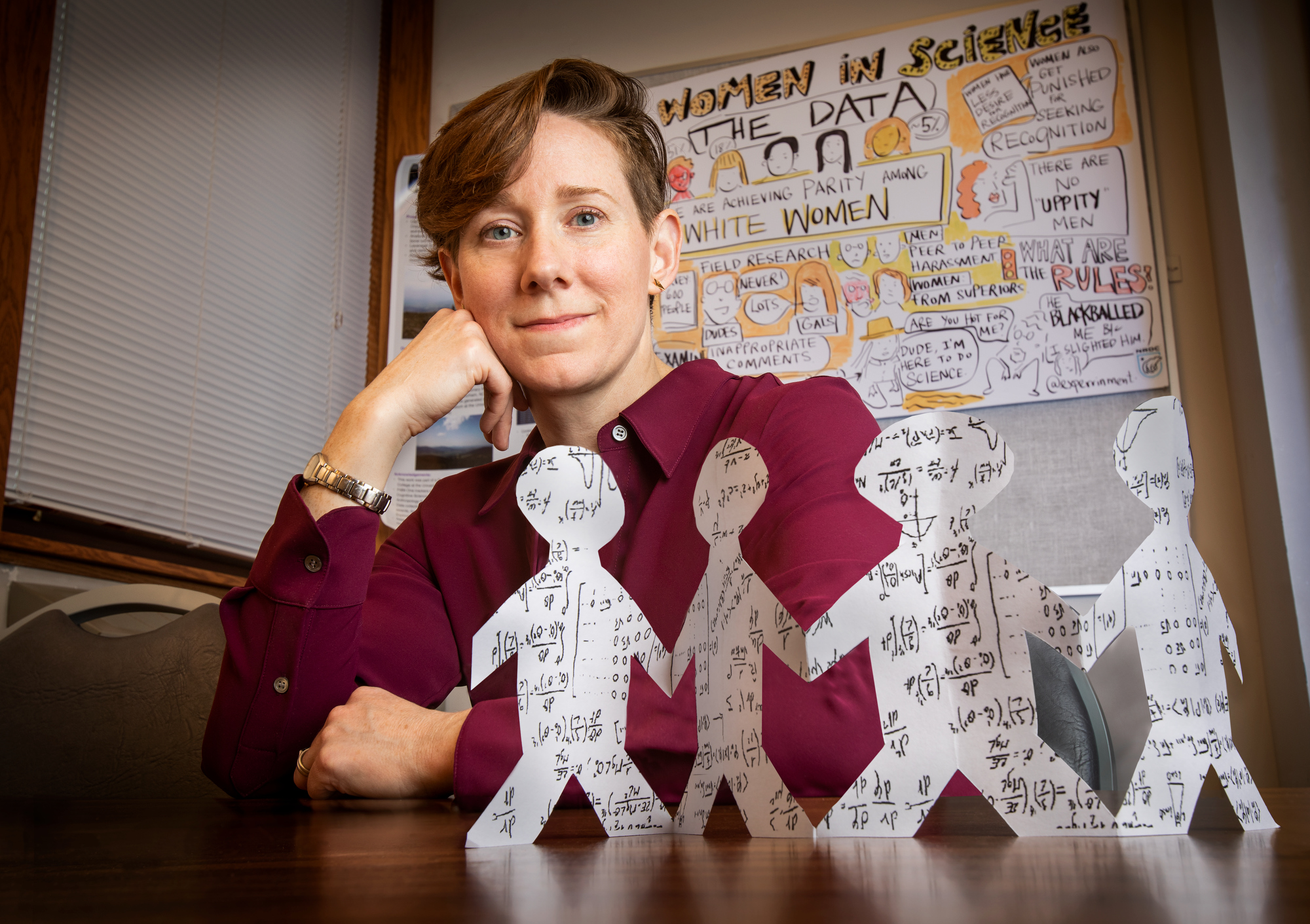
As you all know, the gig that takes up a lot more of my time is that I am an Assistant Professor of Anthropology at the University of Illinois, Urbana-Champaign. I would like to accept at least one graduate student into our program this year to be advised by me. I get emails and messages from folks all the time saying how they would like to work with me.
Why not apply to our PhD program and see if we would be a good fit together? (ETA: Alternately, I’m looking for a postdoc! Write to me and maybe we could apply to this Postdoctoral Fellow Program together at Beckman.)
I am looking for a committed, motivated, curious, hardworking student who wants to make a difference in the world. I want to support the independent research of a junior colleague who wants to work broadly in women’s reproductive ecology, life history theory, and/or evolutionary medicine. While I’d love it if you wanted to work within one of my existing projects, I would also gladly support a student who wants to pave her or his own way in a new, thoughtfully conceived field site.
My projects
Below are my two main projects, the descriptions culled largely from recent grant proposals. You can always chat with me on Twitter or Facebook to find out more.
Girl power! How girls negotiate their environments. Humans’ flexibility in the timing of menarche allows for multiple selection pressures to drive it early or late. Past research demonstrates that early maturity is often driven by psychosocial stress, as one should initiate reproduction when future reproductive opportunities are poor. But what cultural, behavioral and social factors augment one’s experience of her environment and thus her age at menarche? How do these factors influence post-menarcheal physiology and function? The study of resilience offers an exciting way to understand how and why the body allocates resources in the face of selection pressures throughout development.
This is a longitudinal study that follows ethnically and economically diverse pre-menarcheal fifth grade girls at an elementary school in Champaign County, Illinois. Anthropometry will capture growth, ovarian hormones reproduction, and biomarkers maintenance effort to track life history trade-offs. Established psychometric scales for ego resilience, positivity, ethnic identification, and social support will track personal and social resources.
My research aims are 1) to assess the relationship between girls’ personal and social resources, particularly resilience, and their allocation to growth, maintenance, and reproduction in the six to twelve months leading to menarche, and 2) to understand how that transition affects post-menarcheal allocation to growth, maintenance, and reproduction in the six to twelve months following menarche. This project is important to our understanding of evolutionary medicine and mismatch theory as it could suggest a mechanism for additional individual variation in environmental reactivity.
My long-term educational goals are to develop more young female scientists and increase research that solves major problems in girls’ and women’s health. My educational aims are 1) to encourage upper-elementary students to see themselves as scientists through role modeling, reflection activities and hands-on science, and 2) to encourage graduates and undergraduates to remain in science through close mentoring, high expectations and independence.
I have received grant money to fund the pilot, which began this fall. Other grants are pending or being written.
Why some pregnancies don’t make it: ecological influences on the maternal environment. Low fertility likely has been naturally selected in the great ape lineage in order to produce offspring worthy of heavy parental investment. There are multiple points through the course of reproduction where mechanisms exist to select against the fetus, yet it isn’t always clear what conditions promote their activation. Further, while many pregnancies fail due to genetic abnormalities, some patterns of pregnancy loss suggest additional mechanisms via inflammation. An emerging understanding of inflammation’s contribution to reproductive success leads to fascinating questions about human reproductive ecology in the context of parental investment trade-offs. Systemic inflammation can vary not only with immune challenges, but social environment, childhood environment, adiposity and age. What of these factors produce a non-pregnant maternal environment more likely to lead to reproductive success?
This question requires an investigation of endometrial function as a key component of implantation. Trade-offs between maintenance and reproduction are more challenging to observe under conditions of energetic surplus in an industrialized environment, and so I will draw my sample from women in a non-industrial agricultural environment at the Mogielica Site in rural Poland. Energetic constraint and immune challenges should influence resource allocation to ovarian hormone production and endometrial thickness over the menstrual cycle. Therefore I will test hypotheses on 1) intra-population variation in endometrial function, 2) ovarian-endometrial interactions, and 3) inflammatory responses to ecological stressors through the use of ultrasounds, urine collection for biomarkers and ovarian hormones, and anthropometry.
I am applying for funding for this proposal right now. The Mogielica Site is where I did my dissertation fieldwork and so is a viable site for dissertation research regardless of whether a potential student of mine wants to work on the endometrium.
Other past and ongoing research includes work on ecological influences on both ovarian and endometrial function. I have several papers in revision right now on how systemic inflammation correlates with ovarian follicular waves and hormones, more in preparation on hormones, energetic constraint, and endometrial thickness. I have a side project on hormonal contraception that would be fun to talk about as well. And as you know if you read this blog, I am committed to science education and outreach and think there are lots of great post-PhD jobs in addition to academia.
The Department
The University of Illinois, Urbana-Champaign Department of Anthropology is a four-field department. We might be one of the friendliest anthropology departments around which, if you know anything about anthropology and the biological determinism warz, is an impressive feat.
We have eight biological anthropologists, many of whom co-advise students and collaborate together. Our bio anthro crew teaches anatomy at the Medical School, has affiliations with Animal Biology, the Program in Evolution, Ecology and Conservation, Bioinformatics, the Institute for Genomic Biology, and teaches some of the most popular courses on campus. Our last several graduates have gone on to great faculty and postdoctoral positions. Frankly, my colleagues are a bunch of badasses who are just too nice to promote themselves and say so.
As our admissions website notes:
“Successful applicants to our department will be joining one of the leading anthropology programs in the nation. According to the 2010 National Research Council (NRC) report on graduate programs across the nation, Anthropology at the University of Illinois ranked 12th out of 82 peer programs overall, and received rankings of 1st in program outcomes; 1st in percentage of students fully supported through the graduate program; 6th in percentage of minority students; 7th in percentage of international students; and 8th in time to degree.”
So yeah, we’re awesome.
Quality of life
The University of Illinois is the flagship public university for my state, located in east central Illinois. We’re less than two hours to Indianapolis, three to St. Louis and Chicago. The benefits of living near farmland and away from a big city are that the cost of living is low, and the quality of the locally available food (meat, dairy, eggs and produce) is very high year round. I eat better in Urbana, Illinois than I did in Cambridge, Massachusetts. My commute is short (less than a mile) and the park system and recreational opportunities are great.
The graduate students have a union, so you know you have people fighting for your benefits and pay. This means you don’t have to stress as much about whether you will be abused or not get raises commensurate with inflation: the union’s got your back. Instead, you can focus on your research and teaching.
The application
Applications for the Anthropology PhD program are due by December 1st, 2012. You need a good transcript and good GRE scores to be considered, but what I’ve found really makes an application are the quality of the recommendation letters and personal statement. For the recommendation letters, talk to your letter writers about the qualities that you think make you well suited to a PhD program in anthropology and to doing anthropology research. For the personal statement, do not write about how you’ve wanted to do anthropology since the first time you saw Indiana Jones or first left the United States. Instead, use the statement as an opportunity to demonstrate to the admissions committee that you are a scientific thinker — share your scholarly interests, some questions you would like to answer over the course of your PhD. Propose a potential dissertation topic, and make sure to say why you would be a good fit for the university and department to which you are applying.
Learn more about the department: http://www.anthro.illinois.edu/programs/graduate/admissions/index.html
Apply: http://www.grad.illinois.edu/admissions/apply
Friday, October 26th 2012

Figure 1. President Obama (official portrait). Is he the one for me?
You all must forgive me for this blog post. You see, I am in my premenstrual phase, and so with all my insane-o premenstrual symptoms I simply cannot access the part of my brain that makes political decisions. Perhaps when I get through the devastation and physical wreckage we ladies like to think of as menstrual periods I will be able to think again. And when I do, I’ll want to vote for President Obama. I think. Ovulation always makes Romney seem like a big ole’ protective papa fighting for all of America and so, YOU GUYS, I just can’t decide.
Our political attitudes and beliefs are certainly flexible, can change over time, and can be modified by any number of factors. But can they change based on when a woman is more or less fertile during her menstrual cycle? In a manuscript accepted for publication at Psychological Science, Durante et al describe data on political behavior and religious beliefs, and explain how there are reasons to understand these beliefs as flexible and variable. When they begin to talk about reproduction, however, the paper becomes unacceptably flawed and problematic.
So to continue our great tradition, Scicurious and I are tag-teaming on this one. Make sure you read her post for her perspective that addresses more decision-making issues than I do. I’m going to be all about the lady parts.
After you read her, read on here. What’s curious about this manuscript is how at first it takes this relaxed approach that demonstrates a real understanding of the nuances and feedback loops of human nature, then the study authors try to shoehorn it into the usual universalist, reductionist framework we’ve all come to know and love from the worst of evolutionary psychology. Rather than demonstrating how our beliefs may change over time due to changing contexts and experiences, Durante et al would have you believe that women are constantly in flux depending on their time of the month.
I don’t always support gay marriage, but when I do, I am not fertile.

Figure 2. Candidate Romney (public domain image). Or is it this guy I want?
The study authors performed two internet survey studies on 18-34 year old, non-hormonally-contracepting American women (Durante et al. forthcoming). In both, they parsed women into single (not with anyone, casually dating) or in a committed relationship (engaged, living with someone, married) groups. In both studies women in committed relationships were significantly older and more likely to have children; in the second study women in committed relationships also had a significantly higher annual income. They also asked women about the last two dates of their menstrual period in order to classify them as being sampled in their high fertility (days 7-14) or low fertility (17-25) phase.
This means menstruating women were excluded, which they claim are so premenstrual or menstrual symptoms do not interfere with their study. Yet, they included women from days 21-25 of the cycle, which in a regular ovulatory cycle – a cycle all of these women supposedly have – this would be a time of progesterone withdrawal and in the premenstrual phase.
This is a cross-sectional sample. That means each individual was assessed only once, not more than once over her menstrual cycle. For instance, we are not looking at one group of single women assessed at low and high fertility periods, but one group of single women who happened to be in their low fertility period and another group of single women who happened to be in their high fertility period at the time of sampling.
Study 1. The first study by Durante et al looked at interactions between high and low fertility periods and feelings of religiosity. They found low fertility, single women had lower religiosity than high fertility, single women, yet low fertility, committed women had higher religiosity than high fertility, committed women.
Study 2. Durante et al asked participants about religiosity, social political attitudes (i.e., abortion, legalizing marijuana, stem cell research) and fiscal political attitudes (i.e., taxes, social security). They were then asked if they would vote on the day of the study for Obama or Romney, and were asked to which campaign they would give a $1 campaign donation. The study authors found the same relationships between religiosity, fertility phase and relationship status as in Study 1.

Figure 3. This is figure 4A of the Durante et al, showing the “not-ovulating” and “ovulating” groups and their voting preferences.
They found single women: less fiscally and socially conservative, more likely to vote for President Obama (79.3% versus 69.4%), and more likely to donate to Obama (79.9% versus 67.9%). All of these findings were tempered by fertile phase: as with religiosity, the single women who were sampled during high fertility were less socially conservative than those sampled during low fertility. Conversely, committed relationship women who were sampled during high fertility were more socially conservative than their low fertility counterparts. The same trends were found for voting and campaign donation choices, with the more liberal choices made by single women sampled during high fertility times, and by committed relationship women who happened to be sampled during low fertility times. Finally, when looking at all women together, women sampled during low fertility did not have significantly different political attitudes, but single women sampled during high fertility were more liberal than women in committed relationships sampled during high fertility.
Organize the data for physiological relevance, not statistical significance.
If the above is worded awkwardly, it’s because I am trying to make clear how important it is to that the reader understand where the data is coming from. In their use of language, the study authors obscured the fact that their dataset is cross-sectional and correlational. The discussion is especially worrying. Just one example:
“Two studies with relatively large and diverse samples of women found that ovulation had different effects on religious and political orientation depending on whether women were single or in committed relationships. Ovulation led single women to become more socially liberal, less religious, and more likely to vote for Barack Obama” (Durante et al, p. 15).
No. We have no way of knowing what ovulation does or doesn’t do because the study authors didn’t measure ovulation. Even with the authors trying to erase this reality by incorrectly categorizing women. Even with labeling all of their figures with ovulating and not-ovulating groups. And even if their methods had reflected ovulatory versus non-ovulatory states, their results show only correlations between these factors, not effects of reproductive state on attitudes, particularly because of the cross-sectional nature of the data. When you realize that each data point in this research is of a single individual sampled once, opportunistically at whatever phase of her cycle she happens to be on, the results lose a lot of their power.
Further, the way they parse the high fertility and low fertility phases of the menstrual cycle doesn’t reflect what we know about conception probabilities.

Figure 4. The second figure of Wilcox et al 2001 which you may remember from my post on “legitimate rape.” Demonstrates chances for conception through the menstrual cycle with, you know, real hormone data from real ladies.
The average chance for conception on any given day is 3.1% (Wilcox et al. 2001). Using the data from Wilcox et al (2001), women with regular menstrual cycles have a greater than average chance of conception from days 9-18, and women with irregular menstrual cycles from days 12-22. And of course, if we wanted to define high fertility more tightly than just “higher than average” those windows would be even smaller. This doesn’t bode well for the high fertility window of 7-14 days used by Durante et al., and they overlap with the 17-25 window they consider low fertility. Changing the high/low fertility grouping criteria by just a day or two may radically change results. I know this is the case when I look at my own hormone data for my research.
If your foundational assumption is false, your conclusions have no foundation.
Unfortunately, a total misrepresentation of female reproductive biology is unsurprising given how they introduce the topic in their paper. To introduce their section on reproduction, they say:
“Women’s reproductive goals are influenced by a universal biological event – the monthly ovulatory cycle” (Durante et al forthcoming, p.5).
The monthly ovulatory cycle is not a universal biological event. It is a phenomenon experienced by non-hormonally-contracepting, non-pregnant, non-lactating adult women in their twenties and thirties who live in environments that don’t have too much energy constraint, and it’s still not a universal in that group. It doesn’t happen for most elite athletes. It doesn’t happen if you are very obese, if you have polycystic ovaries, if you are an adolescent or if you are a more mature woman. Modern women may have as many as 400 menstrual cycles in their lifetime compared to the estimated 50 of our ancestors, but nowhere near all of them are ovulatory.
Yet this study, along with most studies that try to provide an adaptive explanation for behaviors across the menstrual cycle, requires this assumption in order to move forward and analyze their results. The language of the paper frames the differences they found as being between periods of ovulation versus low fertility, discusses the ovulatory cycle despite not measuring ovulation, and therefore requires that you assume not only that it is normal to have ovulatory cycles, but that all the women of this sample are having ovulatory cycles.
The criteria of simply recruiting women with 25-35 day cycles means you have no way of knowing if your participants ovulated, what their hormone concentrations are, what a normal cycle looks like to them, or even if they had gotten pregnant that cycle.
I do not understand how it is okay to publish papers that are predicated on an assumption about ovulation and hormone concentrations, but not measure ovulation or hormones.
Test your hypothesis, my friend.*
There are two other problems with the ways Durante et al conceived this study. First, in their sample single women were younger, poorer, and had fewer children than women in committed relationships (and remember, they had somewhat loose definitions for both). Age, parent status and socioeconomic status all play roles in political preferences. When you have multiple differences between two groups, but you want to see if only one of those differences is meaningful (in this case, relationship status) there are very easy ways to control for those variables statistically.
Durante et al didn’t do this. So the differences found between the two groups could really be about income or age or being a mom, not relationship status. They didn’t actually test their hypothesis.
Finally, beliefs change over time for many people. But do they change for women over the course of a month, over and over again? And what about pregnant or lactating women? Can they even be trusted to do any important or interesting human behavior with their lack of a menstrual cycle? Or dear god, what about the adolescents? Their cycles are all over the place! It must be because we can’t predict their cycles that they don’t have the right to vote! And don’t even get me started about those postmenopausal grannies with hardly two molecules of estrogen to rub together.
This idea of cyclical political preferences is as ridiculous to me as asking if American men’s religious or political beliefs change every twenty four hours with their very dramatic diurnal pattern of testosterone (which is again, dramatic only if you live in circumstances of low energetic constraint). Just as it was once argued that women should not be world leaders in case they make rash decisions in their premenstrual phase, perhaps the morning glory should be a reason to prohibit male politicians from making policy decisions early in the morning.
An article that relies more on rhetoric and storytelling than evidence, that requires assumptions about human physiology that are patently false, that ignores intra-group differences that better explain their findings than the differences they have decided are important? No big deal, we’re writing this article totes for funzies because it’s presidential election time!
WHATEVER, WE AREN’T DOING SCIENCE OR ANYTHING.
Well, except that the article was accepted for publication in Psychological Science.
I’m voting for Obama, menstrual cycle phase be darned.
*See what I did there?
References
Durante KM, Arsena AR, and Griskevicius V. forthcoming. The fluctuating female vote: politics, religion, and the ovulatory cycle. Psychological Science.
Wilcox AJ, Dunson DB, Weinberg CR, Trussell J, and Baird DD. 2001. Likelihood of conception with a single act of intercourse: providing benchmark rates for assessment of post-coital contraceptives. Contraception 63(4):211-215.
ETA 10/26, ~5pm EST: I very lightly edited this after noticing some awkward sentence constructions. I took care to not alter the meaning or content.